
what ne why niye when ne zaman where nerede how nasıl how much / many ne kadar / kaç which / which one hangi / hangisi who kim whom kimi to whom kime whose kimin from where nereden to where nereye Nereden biliyorsun? How do you know? Kimi tanıyorsun? Whom do you know? Kaç dil öğreniyorsun? How …
| and | ve | friend | arkadaş |
| but | ama | man | adam |
| only | sādece | woman | kadın |
| now | şimdi | boy | çocuk; oğul |
| at the moment | şu anda | baby | bebek |
| always | her zaman | girl | kız |
| never | hiç | child | çocuk |
| something | bir şey | book | kitap |
| nothing | hiçbir şey | pencil | kalem |
| also / too | de/da | paper | kâğıt |
| again | yine; gene; tekrar | dog | köpek |
| of course | tabii; tabii ki | cat | kedi |
| ben | I | biz | we |
| sen | you (singular) | siz | you (formal & plural) |
| o | he / she / it | onlar | they |
The plural you, siz, is also used for formal address. The subject pronouns for the third person singular and plural (o and onlar) are generally replaced by the noun they specify (i.e. the person, the object) in the spoken language.
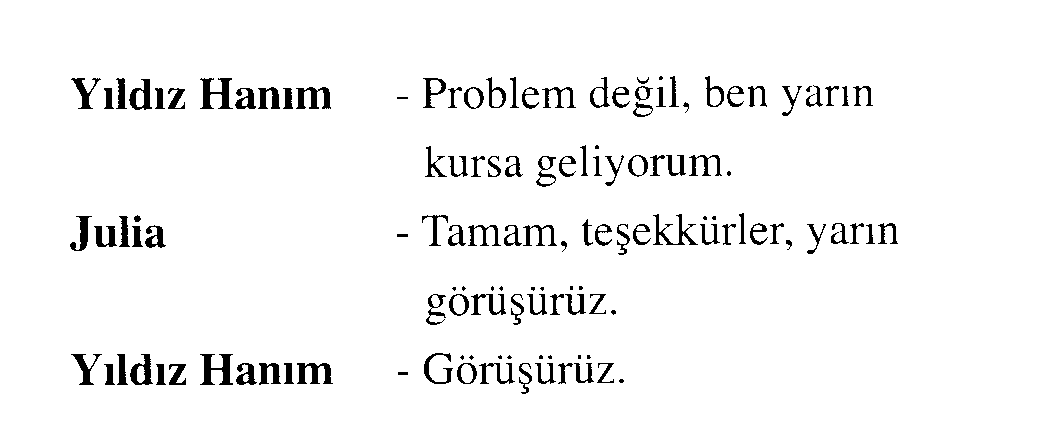
Merhabā / İyi günler Hello / Good day İyi akşamlar Good evening İyi geceler Good night Merhabā / Selâm Hi Güle güle / İyi günler Bye / Goodbye (Good day) Lütfen Please Sonra görüşürüz See you later Görüşürüz! See you Yarın görüşürüz See you tomorrow Özür dilerim! Sorry Affedersiniz / Pardon! Excuse me Hadi gidelim! …